
Understanding How Heat Moves Through a Roof
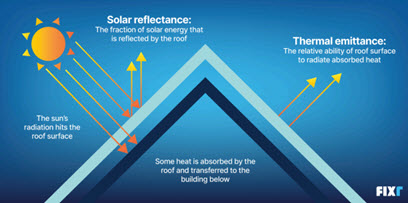
Every roof, whether metal or concrete, is constantly interacting with heat. When sunlight hits the surface, the roof absorbs part of that energy, reflects some of it and releases the rest as heat into the building below. This process is called heat transfer, and it plays a major role in how hard a building’s cooling system has to work.
Traditional roofs tend to absorb a significant amount of solar energy. When the surface heats up, that heat radiates downward into the structure, raising indoor temperatures and increasing the load on air-conditioning systems. In the Philippines, where solar intensity and ambient temperatures remain high for much of the year, this effect becomes especially pronounced. Understanding this science is key to appreciating why cool roof systems can dramatically reduce electricity consumption.
Solar Reflectivity and Why It Matters
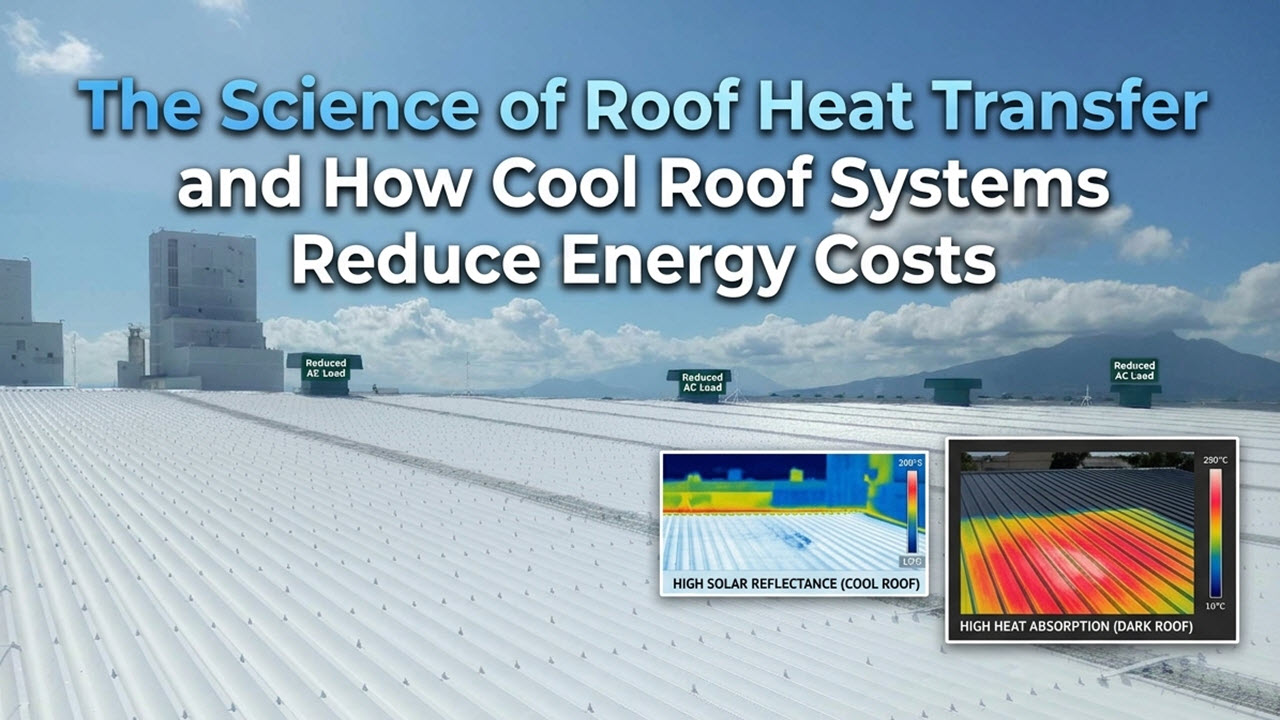
The first major factor in roof heat behavior is solar reflectivity. This measures how much sunlight a surface can reflect instead of absorb. Dark, aged or uncoated roofs absorb far more heat than they should. As temperatures rise, the roof continues pulling heat into the building, often causing interior temperatures to climb even with active cooling.
Cool roof coatings are engineered with reflective pigments that bounce a significant portion of solar energy away from the building. The higher the reflectivity, the less solar energy turns into heat. This reduction in heat absorption directly lowers roof surface temperatures, sometimes by more than 30–40% depending on the system used and the condition of the roof.
Emissivity and Heat Release Reflectivity alone does not determine how “cool” a roof stays. The second critical factor is emissivity, which describes how effectively a material can release absorbed heat. A surface with high emissivity does not hold onto heat for long. Instead, it dissipates that energy back into the atmosphere.
Cool roof coatings are formulated to achieve high emissivity, allowing the roof to cool down faster. This prevents heat buildup throughout the day and reduces the amount of stored heat radiating into the building at night. High emissivity is especially valuable for facilities that operate 24/7 because internal temperatures remain more stable.
Solar Heat Gain and Its Impact on Building Performance
When a roof absorbs solar energy, the heat moves inward through conduction. This is referred to as solar heat gain, and it has a direct influence on cooling expenses. The hotter the roof becomes, the more aggressively air-conditioning systems must work to counteract the heat entering the building.
A cool roof system counters heat gain in two ways. First, it prevents heat from being absorbed by reflecting sunlight. Second, it reduces the transmission of heat into the building by minimizing thermal buildup on the surface. Together, these effects significantly reduce cooling demand. In many cases, energy consumption decreases by a measurable percentage, especially for large commercial and industrial spaces with wide roof areas.
Coating Chemistry and Thermal Performance
Modern cool roof systems rely on advanced coating chemistry. The materials include reflective pigments, polymer binders, UV-resistant additives and thermal insulating components designed to work together. These coatings form a seamless, fully adhered membrane that remains flexible under extreme temperatures.
Their ability to maintain reflectivity and emissivity over time is a critical part of their chemistry. The pigments used in these systems resist fading and UV degradation, while the binder structures prevent cracking, peeling or chalking. This ensures that thermal performance remains consistent long after the initial installation.
Some coating technologies also incorporate micro-ceramic or nano-insulative components that reduce surface conductivity. This gives the coating an additional layer of thermal resistance, slowing heat transfer even further. Combined with proper preparation and application thickness, these coatings create a stable thermal barrier that remains effective for years.
How Cool Roof Systems Reduce Energy Costs
When a roof reflects more sunlight and releases heat efficiently, the building underneath stays cooler. This reduces the cooling load on air-conditioning equipment, allowing it to operate more efficiently and consume less electricity. In facilities with high cooling demand, even a small reduction in internal temperature can result in significant operational savings.
Reduced heat gain also helps extend the lifespan of mechanical equipment. Compressors and chillers experience less strain when they are not constantly counteracting rooftop heat. The effects compound over time: lower energy bills, fewer maintenance issues and improved comfort for personnel working inside the building.
A cool roof system does not just improve indoor temperature. It alters the building’s entire thermal performance profile.
Why This Matters for Building Owners in the Philippines
The climate in the Philippines intensifies every element of roof heat transfer. Strong sunlight, high humidity and long dry seasons contribute to elevated roof temperatures and increased energy consumption. Commercial and industrial facilities, especially those with large roof areas, experience heat gain on a scale that significantly affects their operating costs.
Cool roof systems address these challenges directly. By controlling how the roof interacts with solar energy, they provide building owners with a scientifically backed way to reduce heat, improve comfort and lower electricity bills without replacing the entire roof structure.